
EGR diagnostics, cleaning and repair in Auckland
An EGR warning light, rough idle or loss of performance should be properly tested before the valve is cleaned or replaced. PSM Workshop diagnoses the complete system and recommends the most suitable repair for your vehicle.
- Advanced engine diagnostics
- Cleaning, repair and replacement options
- Cars, vans, utes and 4x4s
- Established Ellerslie workshop

What does an EGR system do?
Exhaust Gas Recirculation is an emissions-control system used on many diesel engines and some petrol engines. It allows a controlled amount of exhaust gas to return to the engine intake under certain operating conditions.
This helps reduce combustion temperatures and the production of nitrogen oxide emissions.
Over time, soot and oil vapour can create carbon deposits inside the EGR valve and intake system. The valve may become restricted, stick open, remain closed or stop responding correctly.
An EGR fault can also be caused by a failed actuator, sensor, vacuum supply, wiring issue or a problem elsewhere in the intake, boost or emissions system. That is why the fault should be properly diagnosed before parts are cleaned or replaced.
How it works
See How the EGR System Works
This short animation explains how the Exhaust Gas Recirculation system operates and how carbon contamination can affect its performance.
Common symptoms
Signs your EGR system may need attention
Engine warning light
The engine computer may detect incorrect EGR flow, valve movement or a related intake and emissions fault.
Rough or unstable idle
A valve that is stuck open or not controlling flow correctly can affect how smoothly the engine runs at idle.
Reduced power or limp mode
The vehicle may hesitate, feel sluggish or restrict performance when an EGR or airflow-related fault is detected.
Poor fuel economy
Incorrect EGR operation and repeated fault-management strategies can contribute to increased fuel use.
Smoke or increased emissions
Restricted airflow, incomplete combustion and related engine faults may cause unusual smoke or exhaust behaviour.
Stalling, hesitation or surging
Incorrect exhaust-gas flow can contribute to hesitation, surging or stalling, although other engine faults can cause similar symptoms.
Our EGR services
Testing first, then the right repair
PSM provides EGR diagnosis, cleaning, repair and replacement. We inspect the system, identify the cause of the fault and explain the available options before carrying out additional work.
EGR fault diagnosis
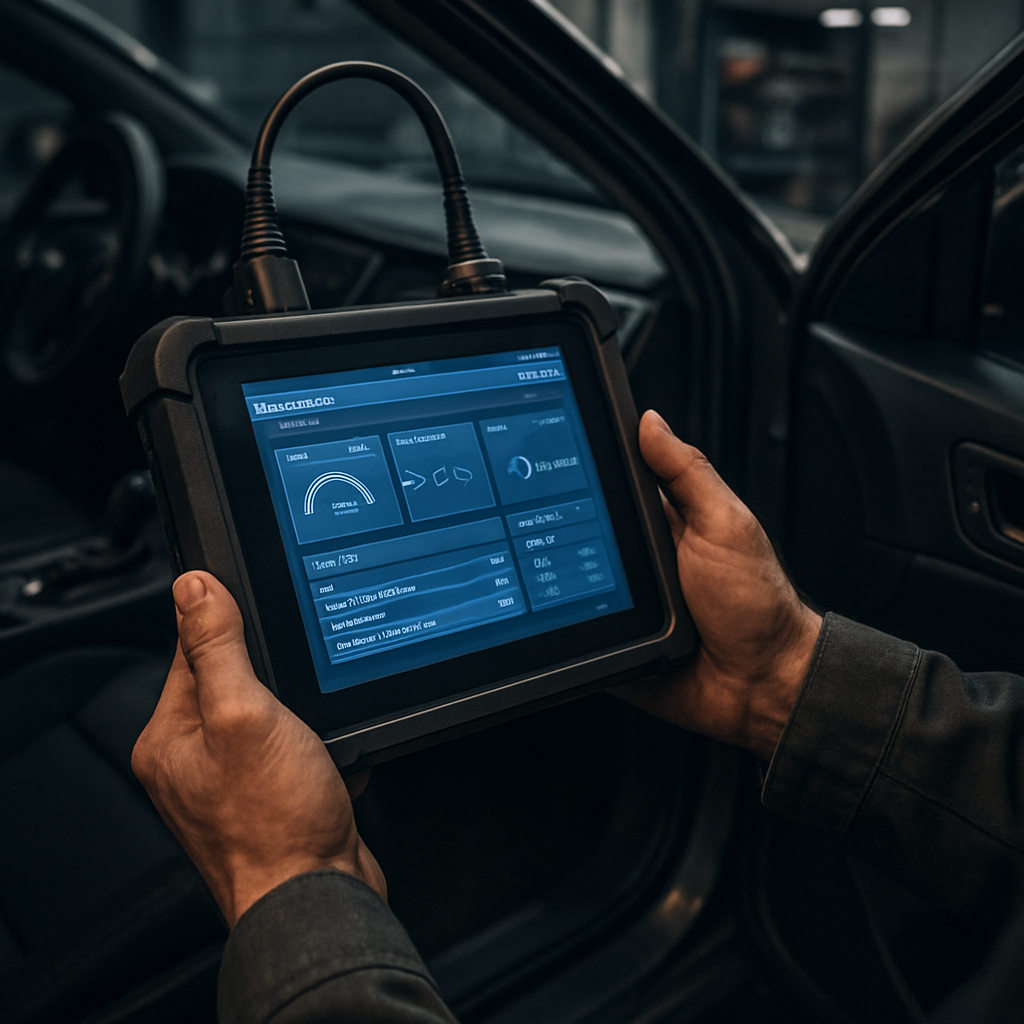
Diagnostic scanning, fault-code interpretation and live-data testing to assess the operation of the EGR and related systems.
EGR valve operation testing
Testing commanded and actual valve movement, position feedback and system response where supported by the vehicle.
Vacuum and electrical testing
Inspection of vacuum lines, solenoids, wiring, connectors, power supplies and control signals where relevant.
EGR cleaning
Removal and cleaning of suitable EGR valves and accessible carbon deposits where the component remains serviceable.
Intake carbon assessment
Assessment of carbon build-up in related intake passages where restricted airflow may be contributing to the fault.
EGR valve replacement
Replacement of valves that are electrically faulty, mechanically damaged, excessively worn or unsuitable for cleaning.
EGR cooler diagnosis and repair
Inspection of the EGR cooler and related components where blockage, leakage or cooling-system symptoms are suspected.
Adaptation resets and coding
Resetting supported learned values and carrying out relevant coding or adaptation procedures after repair or replacement.
ECU and software-related assessment
ECU and calibration-related options can be assessed where they are appropriate, lawful and suitable for the vehicle’s intended use.
Cleaning is not suitable for every EGR fault. A failed actuator, damaged valve, leaking cooler or electrical problem may require repair or replacement instead.
How we diagnose it
An EGR fault code is only the starting point
- 1
Discuss the symptoms
We ask about warning lights, rough running, power loss, smoke, previous repairs and when the problem occurs.
- 2
Scan the complete system
We read stored and pending fault codes and review live information from the engine and emissions systems.
- 3
Test EGR operation
Where supported, we compare requested and actual EGR position, airflow readings and the response of the system.
- 4
Inspect related components
Vacuum controls, wiring, intake restriction, boost operation, sensors and other relevant systems are checked where required.
- 5
Recommend and verify the repair
We explain whether cleaning, repair, replacement or further diagnosis is appropriate, then retest the system after approved work is completed.
Clean or replace?
The condition of the component determines the solution
When EGR cleaning may help
Cleaning may be appropriate when carbon build-up is restricting a valve that is otherwise mechanically and electrically serviceable.
Suitable cleaning may restore movement and airflow, but the surrounding intake system and the reason for the build-up should also be considered.
- Carbon contamination is the main issue
- Valve movement can be restored
- Actuator and position feedback still operate correctly
- The component is not physically damaged
When replacement may be required
Replacement may be the better option when the valve actuator, position sensor, housing or internal mechanism has failed.
Cleaning cannot repair an electrical failure, damaged component or leaking EGR cooler.
- Electrical or actuator failure
- Internal mechanical damage
- Excessive wear or seizure
- Cooler leakage or damage
- Cleaning has already failed
PSM will explain the available options and obtain approval before carrying out additional work.
Why EGR problems happen
Common causes of EGR faults
- Carbon and soot build-up
- Oil vapour entering the intake system
- Repeated short trips and low-load driving
- A sticking or seized EGR valve
- Failed valve actuator or position sensor
- Split, blocked or disconnected vacuum lines
- Faulty control solenoids
- Wiring or connector faults
- Restricted intake passages
- Airflow or boost-pressure sensor faults
- Turbocharger or boost-control problems
- EGR cooler blockage or leakage
- Previous fault codes cleared without fixing the cause
A fault code mentioning EGR flow does not automatically prove that the valve itself has failed. Airflow, boost, intake, sensor and wiring faults can produce similar results.
EGR and DPF faults can be connected
The EGR, intake and diesel particulate filter systems operate as part of the wider engine and emissions system.
Poor combustion, restricted airflow or an unresolved EGR fault can contribute to increased soot production and repeated DPF problems. A heavily restricted DPF or another engine fault can also affect how the vehicle performs.
When the symptoms overlap, PSM can assess the relevant systems together rather than treating each warning light in isolation.
Road vehicle emissions compliance
PSM focuses on proper diagnosis, cleaning, repair and replacement of emissions-control equipment.
Any hardware or software-related work must be assessed against the vehicle’s intended use and applicable New Zealand requirements. We do not make blanket promises about modification or Warrant of Fitness compliance.
EGR services for a wide range of vehicles
We diagnose EGR faults in European, Japanese, Korean and other vehicles, including diesel cars, commercial vans, utes and 4x4s.
EGR FAQs
Common EGR questions
Related emission services
You might also need
Engine light or EGR fault showing?
Tell us what your vehicle is doing and our team will arrange the right diagnostic starting point.